



Winter is the time of year when the true nature, stability and level of care of any material become most visible. Handcrafted terracotta tiles, with their open, unglazed structure, possess a unique set of characteristics. They breathe, absorb and release moisture, respond to temperature changes and adapt to their surroundings. For that reason, they should not be expected to behave like industrially manufactured ceramics, but rather to show a natural reaction that requires attention and preparation before the cold season begins.
To ensure that handcrafted terracotta tiles withstand the winter without any issues, it is essential to understand how moisture enters the material and what happens when it freezes inside. Once temperatures drop below freezing, water expands. If this happens within the pores of the tile, pressure builds up — and over time, this can lead to damage. The goal of winter preparation is therefore to reduce the amount of moisture inside the material and protect the surface in such a way that new moisture can scarcely penetrate.
Cleaning – the first and most important step of winter preparation
Throughout the year, terracotta surfaces accumulate dust, pollen, soil, mud, leaves and various organic debris. All of these layers hold moisture for much longer than the tile itself. That is why it is essential to remove anything that traps water before the winter season begins.
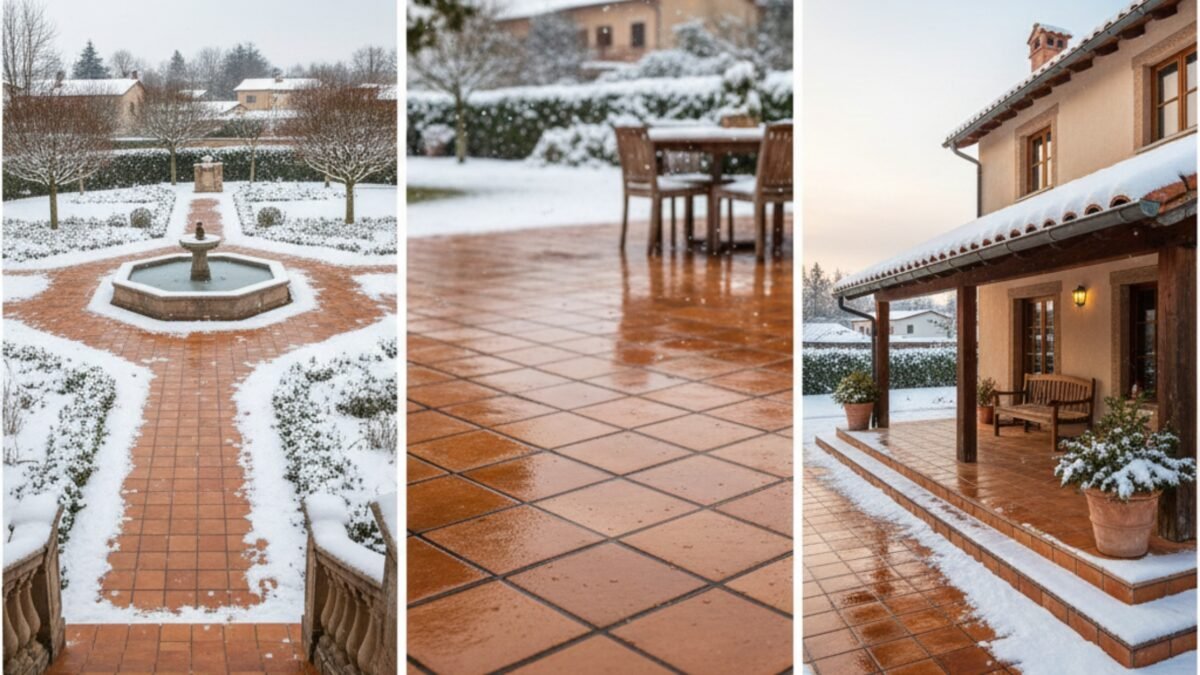
Handcrafted terracotta tiles are cleaned gently — using warm water and a mild, neutral detergent. The goal is not aggressive scrubbing, but restoring the surface to its natural state. After cleaning, the tiles must be allowed to dry completely — both on the surface and deep within the material.
Drying – the decisive part of the preparation
Even if the surface appears dry after a short time, this does not mean that the inside is dry as well. Handcrafted terracotta tiles have a deeper pore structure than industrially manufactured products, and therefore require more time to dry out fully. Ideally, several dry and windy days help the remaining moisture escape from within.
This step is crucial. If the impregnating product is applied before the tiles are completely dry, moisture becomes trapped beneath the surface — a risk that intensifies during winter as frost sets in. Only thoroughly dried terracotta reacts stably to temperature fluctuations.
Surface inspection – key points before the cold months
Once the tiles are clean and dry, the entire surface must be inspected.
Handcrafted terracotta tiles should be observed especially in areas where water tends to collect after rainfall. Small depressions, insufficient slope or zones where puddles form indicate that drainage needs to be improved. The same applies to the joints: damaged or partially missing grout allows moisture to penetrate beneath the tiles much more easily. These issues should always be addressed before winter arrives.
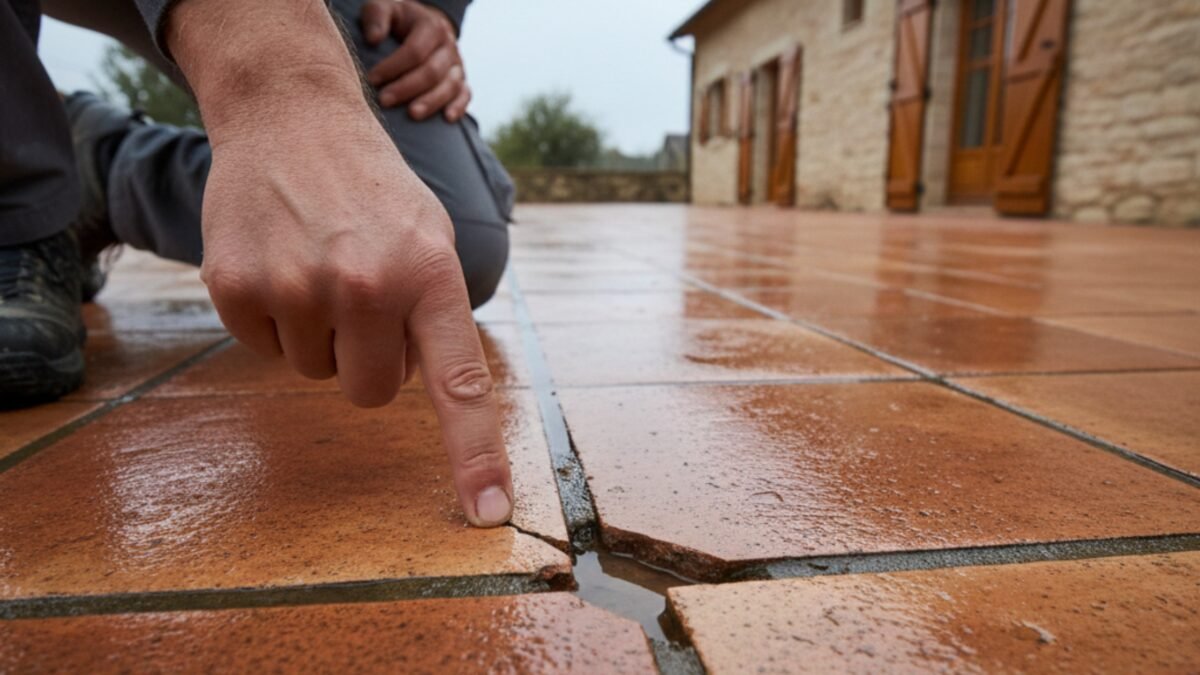
Even small cracks on individual tiles are usually no cause for concern, but they should be taken seriously because they absorb moisture more easily. They are a clear indication that these areas require additional protection during winter.
Protection – choosing the right impregnating treatment for outdoor use
Once handcrafted terracotta tiles are completely dry, the protective treatment can begin. Terracotta does not tolerate products that form a closed surface film, as such coatings seal the pores and may trap moisture inside. For this reason, only impregnating products that penetrate deep into the material, repel water and remain breathable should be used.
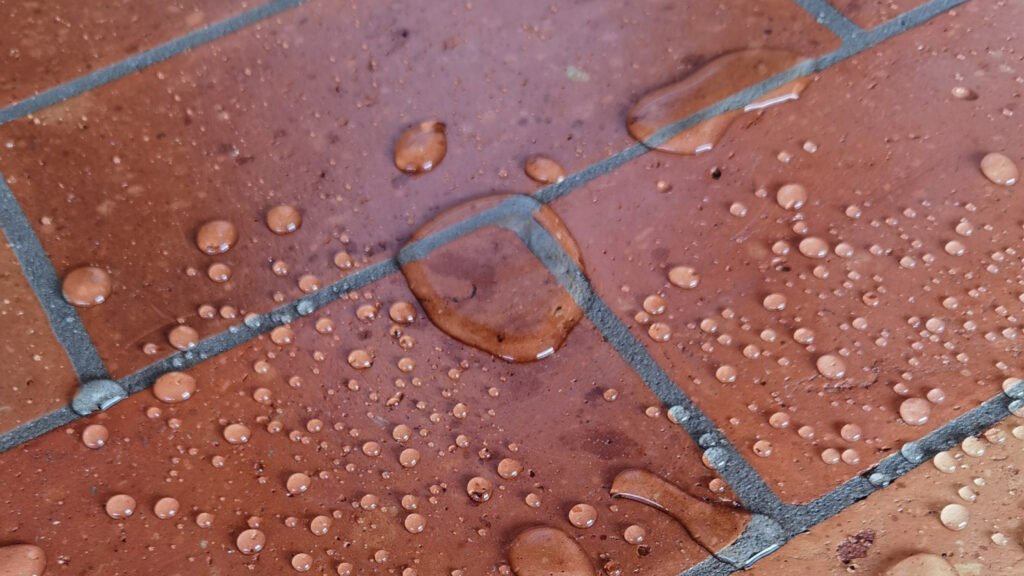
For outdoor areas, water-based impregnators have proven to be the most reliable choice. They absorb evenly, do not alter the colour of the tiles and allow rainwater to bead off the surface instead of penetrating the material. This is the key advantage during the cold season.
In covered outdoor areas and interior spaces, oil-based impregnators are frequently used because they deepen the colour tone and highlight the natural structure of terracotta. However, they should only be applied when the material is absolutely dry.
A detailed step-by-step guide to terracotta impregnation can be found here:
https://cotto-rustic.at/terracotta-fliesen-impragnieren-anleitung/
Impregnation is not permanent. Outdoor surfaces that are regularly exposed to rain and snow typically require a refresher every one to two years. In milder climates or on protected terraces, the protective effect can last longer. The most reliable way to assess the condition is to observe the tiles after rainfall: if water beads on the surface and does not absorb, the impregnation is still active. If the tiles darken quickly and absorb moisture, it is time to renew the protective layer.
On covered terraces, the impregnation usually lasts two to three years. Indoor areas require a refresh only when needed — often not until after three to five years.
Winter care – what matters during the cold season
During winter, handcrafted terracotta tiles do not require any special treatment, but they do benefit from occasionally removing snow, leaves, soil and organic material that may accumulate on the surface. These layers hold moisture longer than the tile itself and slow down the drying process.
If a whitish, powdery residue appears during the winter, it is efflorescence — a completely natural process. As moisture evaporates, salts are transported to the surface. This is not damage and can be easily cleaned off in spring.
Spring inspection – closing the yearly maintenance cycle
Once the frost has passed and temperatures remain stable, the safest phase for terracotta begins. Spring is the ideal time to check the condition of the impregnation, especially if the last application was one or two years ago. It is also the best moment to apply a new protective layer, as the weather is stable and the material remains naturally dry.
If everything was done correctly before winter, handcrafted terracotta tiles will look just as good in spring as they did before the cold season. This confirms that the preparation was successful.
Conclusion – proper preparation ensures long-lasting durability
Handcrafted terracotta tiles withstand winter effortlessly when they are prepared correctly. Terracotta has been used for centuries, even in regions with far harsher winters. Its longevity has little to do with luck, and everything to do with understanding the natural behaviour of the material. Clean, dry and properly impregnated tiles remain stable even in frost, rain and snow.
The Cotto Rustic approach is clear: respect the natural structure of the material, prepare it properly before winter and inspect the impregnation occasionally. This ensures long life, enduring stability and a beautiful, timeless appearance. When terracotta is cared for in a way that honours its nature, it rewards you with exceptional durability and a patina that becomes more beautiful with every passing year.
FAQ – Frequently Asked Questions about Preparing Handcrafted Terracotta Tiles for Winter Outdoors
Are handcrafted terracotta tiles really frost-resistant for outdoor use?
Yes. Handcrafted terracotta tiles are frost-resistant as long as they enter the winter season clean, completely dry and properly impregnated. Frost itself is not the problem — the only risk is moisture trapped inside the pores, which expands when freezing and creates pressure.
How often should terracotta impregnation be renewed outdoors?
Outdoor terracotta tiles generally require a fresh coat every one to three years, depending on weather conditions and how exposed the surface is. Open terraces that are exposed to rain and snow will need more frequent renewal than protected or covered areas.
How can I tell if the impregnation on my terracotta tiles is no longer effective?
The simplest test is after rainfall: if water beads clearly on the surface and remains as droplets, the impregnation is still active. If the tile darkens quickly and absorbs water, it is time to reapply the protective treatment.
Is efflorescence a sign of damage on terracotta tiles?
No. Efflorescence is a natural process, especially on outdoor terracotta. As moisture evaporates, salts migrate to the surface and form a white, powdery layer. This does not damage the terracotta and can be easily cleaned in spring.
Should terracotta tiles be cleaned during winter?
Regular washing is not necessary. However, it is advisable to remove snow, leaves and organic material from terracotta surfaces so that moisture does not remain on the tiles for extended periods.
Can terracotta tiles be cleaned with a high-pressure washer?
High-pressure cleaning is not recommended for terracotta tiles — especially outdoors. The strong pressure can force water deep into the pores and increase the risk of frost-related damage later on. Gentle cleaning with water and a mild detergent is the safer solution.
Is an oil-based impregnation suitable for outdoor terracotta tiles?
For open outdoor areas, not really. Oil-based terracotta impregnators are ideal for interiors or covered terraces. For exterior use, a water-based impregnator is recommended because it preserves the natural breathability of handcrafted terracotta while providing reliable protection against moisture.