

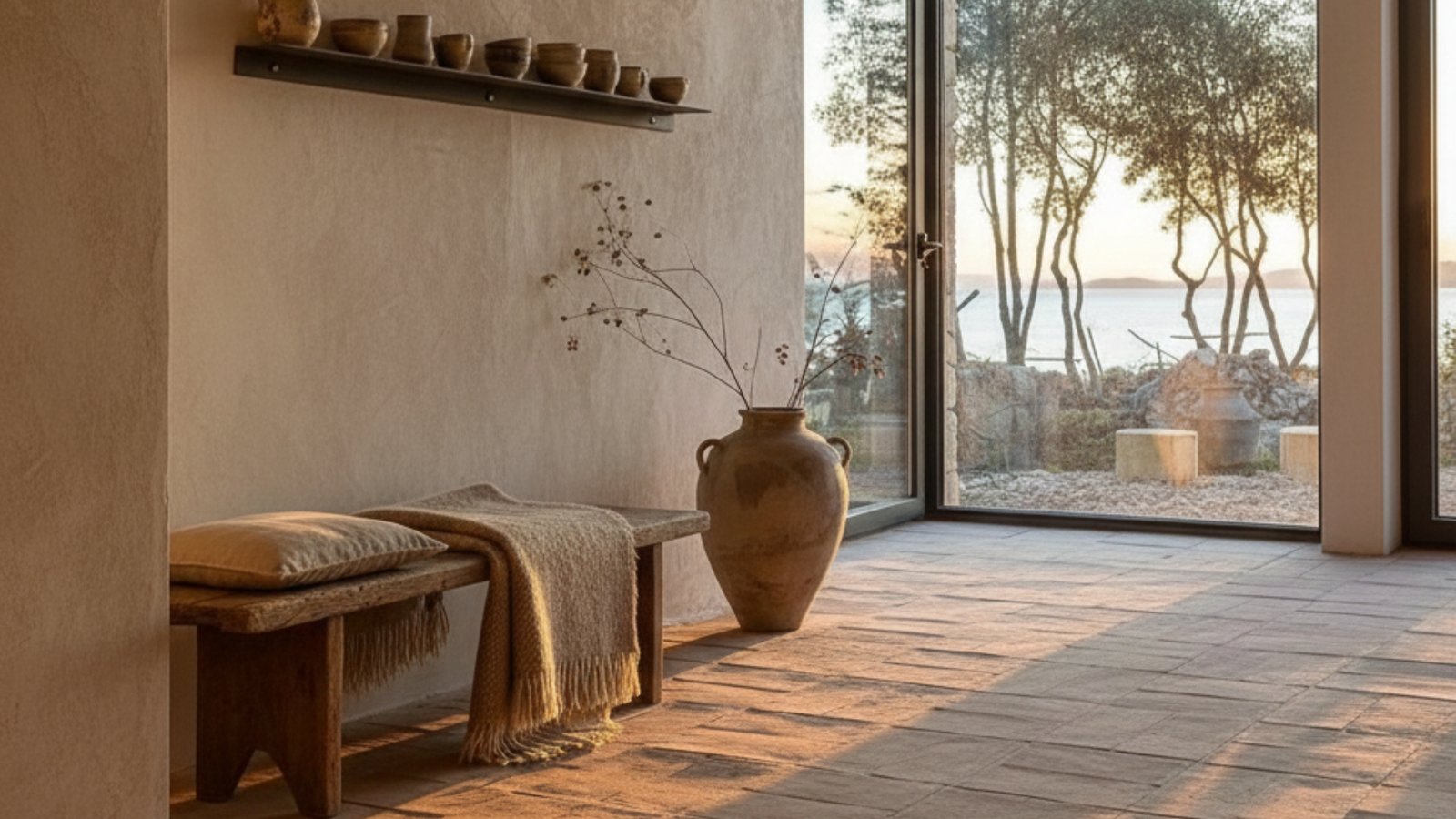

In a time when perfection is treated as an obligatory standard—when every millimetre of a room is measured, every surface is smoothed, every tone is standardised and every irregularity removed—handcrafted terracotta tiles offer a completely different, almost revolutionary aesthetic. They do not try to impress through precision, they do not compete with industrial materials in terms of uniformity, and they do not attempt to appear as something they are not. Their value lies in their loyalty to themselves — to clay, fire, time, and the human hand. This is why they are not just a material, but a lived philosophy. And the philosophy that most profoundly describes this form of beauty is Wabi-Sabi.
Wabi-Sabi is a Japanese concept that is simple in essence, yet profound, quiet and unobtrusive in its application. It teaches that beauty is not found in perfect symmetry, cold geometry or mathematically calculated aesthetics, but in uniqueness, naturalness and the traces of time. It shows that imperfection, simplicity and authenticity are the highest forms of elegance. When this philosophy meets handcrafted terracotta tiles, it creates a space that is grounded yet refined, honest yet noble, warm and calm.
A space that breathes.
Wabi-Sabi – A philosophy not taught, but lived
Wabi-Sabi is not an interior design style. It does not belong to any specific direction within interior design, nor can it be mechanically “applied.” It is a way of looking at the world – and consequently, a way of understanding how we live within spaces. At the core of this philosophy lies the acceptance of impermanence, the natural process of change, and the understanding that perfection does not exist. Beauty emerges when we allow materials to age, colours to shift, surfaces to develop their own life, and spaces to retain memories. This is precisely where the connection to handcrafted terracotta tiles begins.
These tiles consist of nothing more than earth and water, shaped by the hands of a master and strengthened by fire. Every piece carries the imprint of a human being – every hand mark, every tool trace, every moment in the kiln creates a visual and tactile uniqueness. Each tile is a small sculpture. Each one is a one-of-a-kind piece – even within the same series.
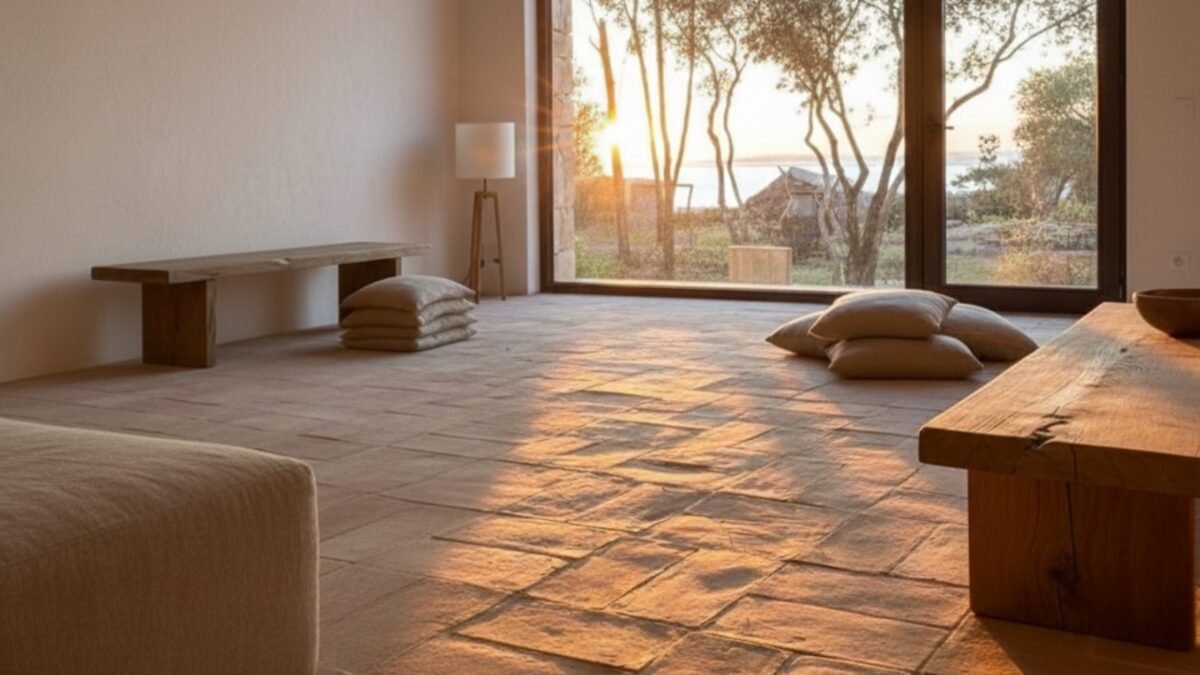
The authenticity of each tile is not only the result of skilled craftsmanship, but of the entire traditional production process. Every stage – from preparing the clay, to natural drying, to the final firing – follows centuries-old techniques. The firing process plays a particularly important role: the tiles are fired in wood-burning kilns, which create unique colour variations and textures. The fire, as a living element, “decides” the shades, contrasts and character of each individual tile – something industrial manufacturing can never replicate.
In a world defined by uniformity, handcrafted terracotta tiles prove that true uniqueness still exists.
Terracotta – A material that does not imitate, but reveals
Today’s interior industry is filled with materials that imitate nature – porcelain that looks like wood, ceramics that mimic concrete, laminate that imitates stone. All attempt to copy a different aesthetic, but in doing so lose their own identity. Handcrafted terracotta tiles imitate nothing. They are exactly what they are: earth transformed into material. Within the Wabi-Sabi philosophy, this honesty about the origin of the material is regarded as a source of genuine beauty.
These tiles have no superficial layer that hides irregularities. There is no digital print that imitates an organic structure, no perfect, cold geometry. Their colour develops naturally during the firing process and has a depth no factory can produce. It is not an applied colour – it is a colour that is born.

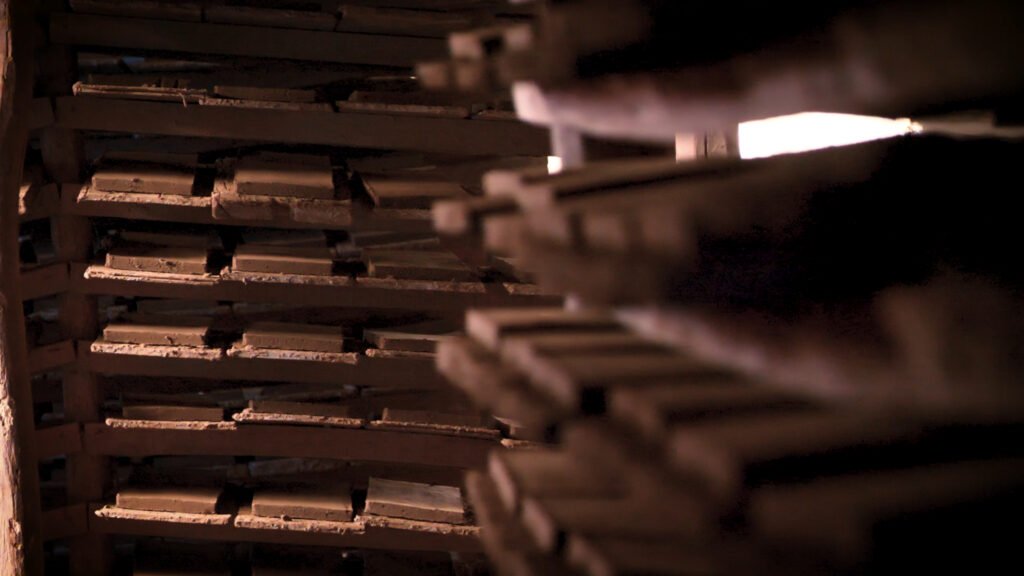
Because the tiles are fired in wood-burning kilns, natural variations in temperature and flame intensity occur. This variability creates rich, authentic colour gradients that cannot be programmed. Each piece has its own “moment in time” inside the kiln – closer or further from the fire, exposed to the embers for longer or shorter periods. This results in a colour that is not designed but grown – natural, honest and impossible to repeat.
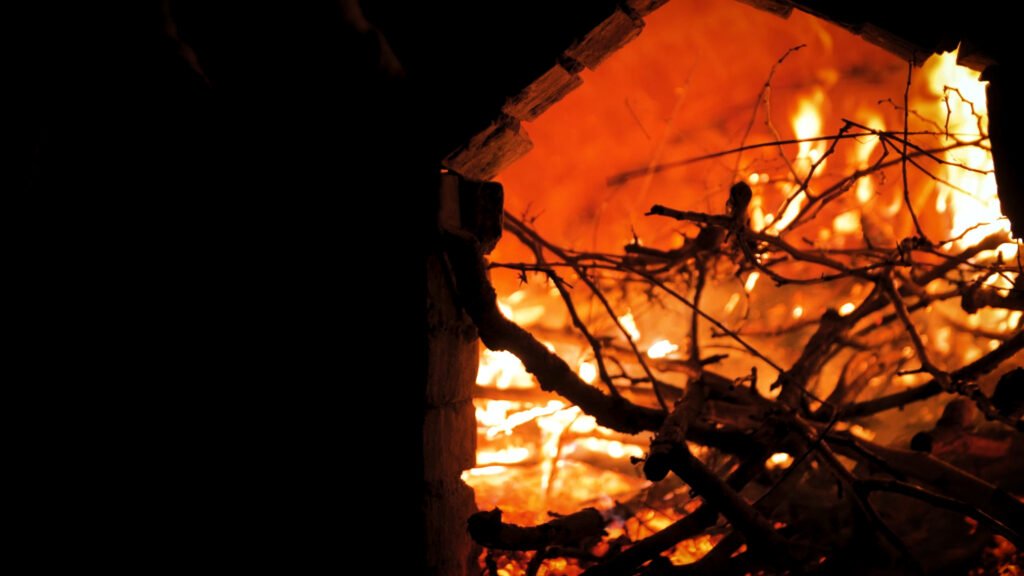
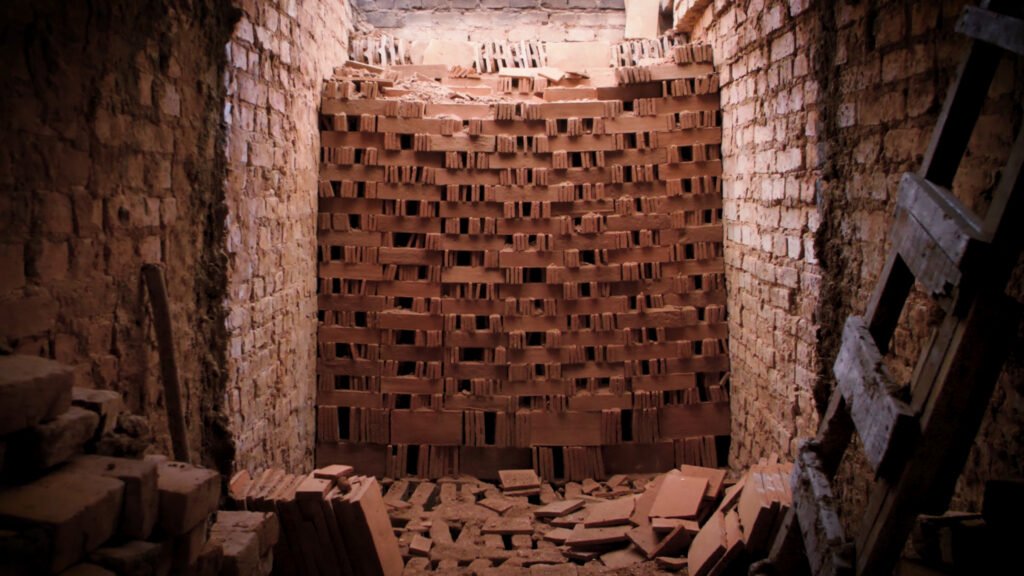
Just as no sunset is ever the same, no two tiles are identical.
Rhythmic Imperfection – An Aesthetic of Calm
With industrially manufactured materials, everything feels “correct.” Lines meet perfectly, transitions are identical, surfaces are sterile. This often creates a sense of coldness — the feeling that a room exists to be displayed rather than lived in. Handcrafted terracotta tiles bring the opposite: small dimensional variations, soft edges, gentle irregularities and subtle tonal shifts create a rhythm that calms the eye and makes the space feel human.
In Wabi-Sabi aesthetics, a room does not need to be perfectly straight to be beautiful — it needs to be honest. Handcrafted terracotta tiles are honest: they do not hide their tool marks, they do not disguise their process, and they do not strive for industrial perfection. All of this together creates inner harmony. A wall or a floor made with these tiles is not a surface — it is a living landscape.
Mehr über die Unterschiede zwischen handgefertigten und industriellen Terracotta Fliesen erfahren Sie hier – Handmade or Industrial Terracotta Tiles? Key Differences & How to Decide
Colour Born from Fire – Not from a Factory
The deepest quality of handcrafted terracotta tiles lies in their colour play. This depends not only on the clay itself, but on how the fire touches each individual piece. Some areas are fired darker, others remain light, and transitions can be soft or dramatic — yet they always feel like a natural process. Wabi-Sabi seeks colours with inner movement, not flat tones. And that is precisely what handcrafted tiles offer: lively, warm, deep nuances that shift with the light.
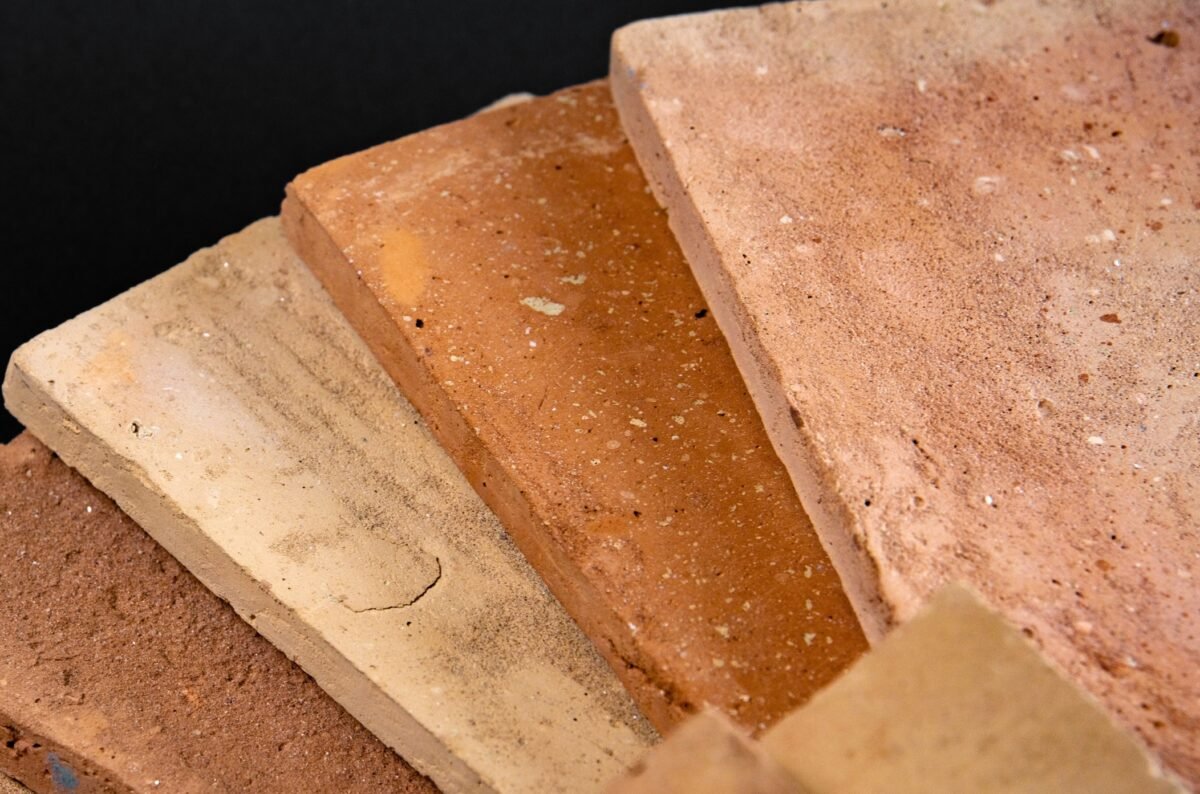
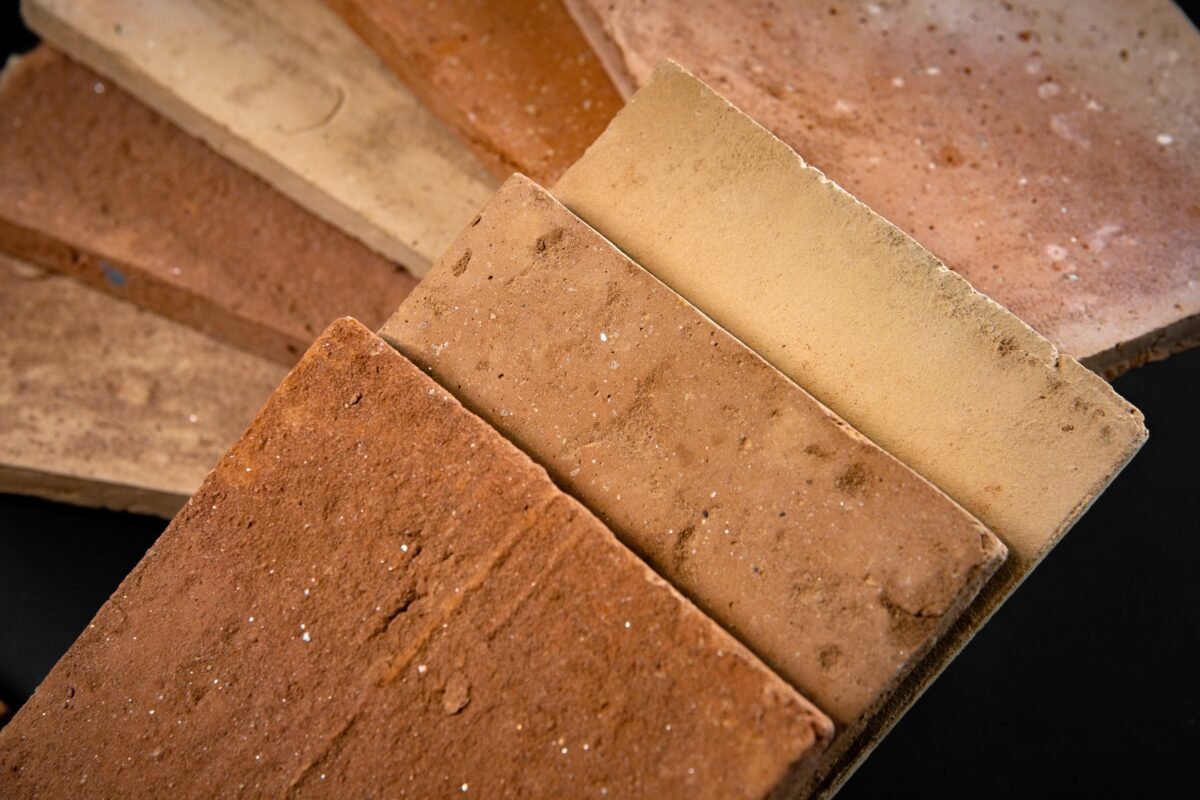
Morning sunlight brings out reddish warmth, in the afternoon earthy tones become more prominent, and in the evening artificial light highlights golden accents. This is a visual play that industrial ceramics can never offer. They look the same in every light — sterile and static. Handcrafted terracotta tiles live with the room.
Tactility That Creates Connection
In Wabi-Sabi philosophy, touch plays a central role. Materials are meant not only to be seen, but to be felt. Handcrafted terracotta tiles invite touch. Whether smoothly sanded or rustic, they always carry character. When you run your hand across them, you feel their organic structure — gentle transitions, the clay itself, the traces of the process. Completely different from smooth, flawless factory surfaces.
This tactile quality creates emotional closeness. People instinctively feel the difference between a natural and an artificial surface. Even when finished, a natural surface is never completely uniform. Micrometre by micrometre, it carries personality. Such materials make spaces warm and inviting.
Patina – The Language of Time
One of the most poetic aspects of Wabi-Sabi philosophy is the acceptance of impermanence. Beauty is found not only in what is new, but in the way materials change over time. Handcrafted terracotta tiles may be the most beautiful material when it comes to patina. Over the years they become deeper, softer and more matte. They evolve through their interaction with life itself.
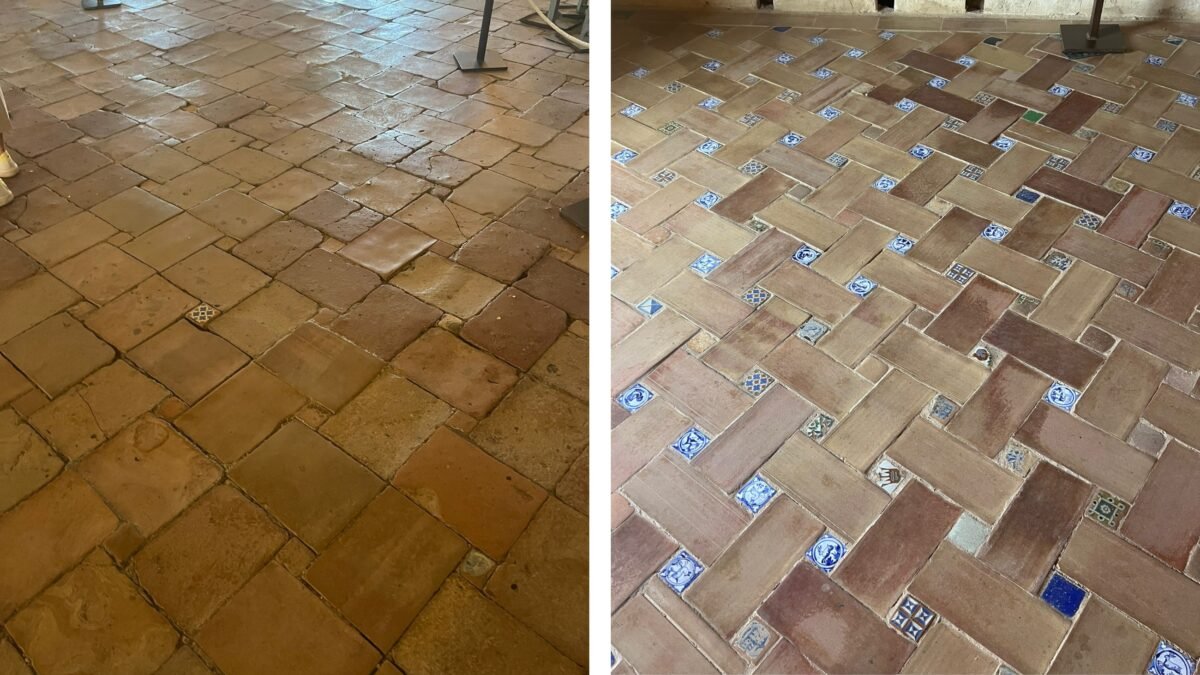
A floor made from these tiles becomes the diary of everyday life. Every change in colour, every edge that darkens, every line that softens makes the room more intimate, more human, more meaningful. Wabi-Sabi says: nothing should be hidden — neither the traces of time nor of use. They are evidence of a life that is being lived. And terracotta carries this evidence in the most beautiful way.
Simplicity That Does Not Speak, but Listens
Handcrafted terracotta tiles have the rare ability to fill a room without dominating it. They do not demand attention, they do not compete with furniture, and they need no decoration to have an impact. Their strength lies in their quiet presence.
Such simplicity calms the mind. A room with these tiles becomes instantly quieter, slower, more harmonious — a place where one enjoys staying.
Sustainability as a Lived Philosophy
The Wabi-Sabi philosophy is closely connected to sustainability — not as a marketing trend, but as a way of life.
Handcrafted terracotta tiles embody sustainability. They are made from local clay and water, without chemicals or artificial additives. They do not need replacement — only care. They age beautifully. In a fast-paced world, this choice stands for slowing down, depth and responsibility.
The Silence of a Material That Remembers
These tiles possess a quiet dignity that does not demand attention, yet leaves a lasting impression. They do not conquer the room — they root themselves within it, with invisible threads connecting past, present and future.
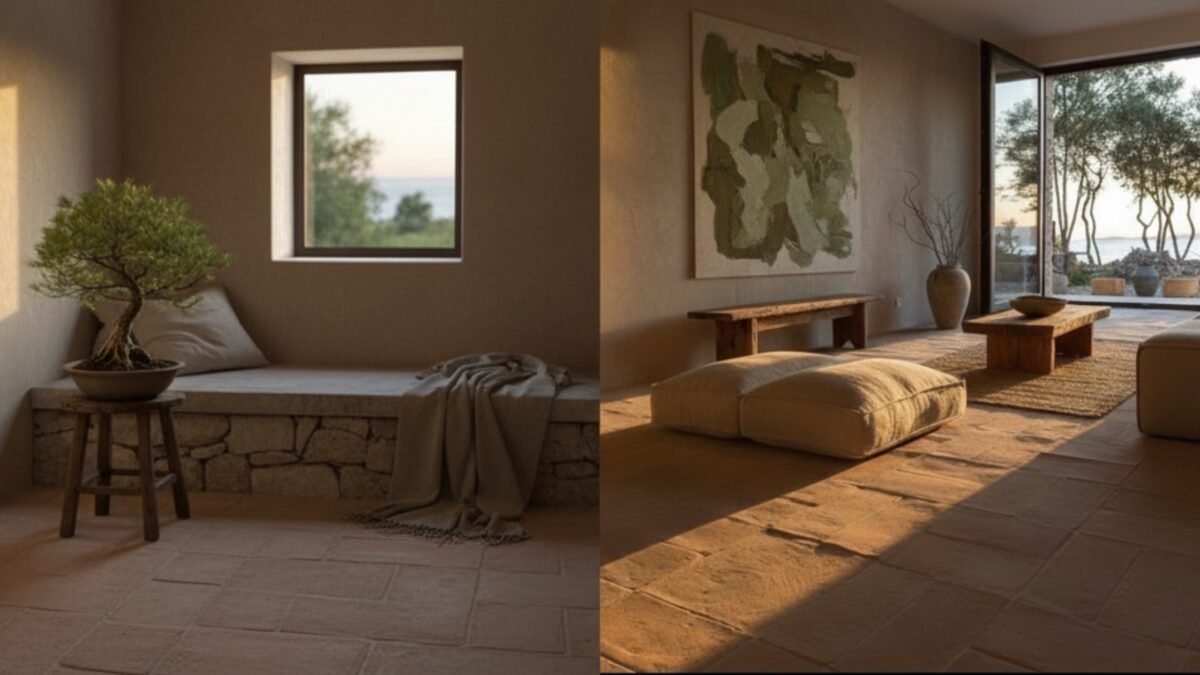
Just like footprints in a field, these tiles leave traces — every step, every change, every touch remains. Their beauty does not lie in brilliance, but in patience. They are witnesses, not performers. They remember — without imposing.
Conclusion – A Material That Does Not Follow Trends, but Endures Through Time
Handcrafted terracotta tiles are not a passing style. They belong to the rare materials that outlive fashion.
The connection between Wabi-Sabi and this traditional product is not a stylised idea — it is a natural truth.
This is why they are the right choice for anyone who wants to create spaces with soul — spaces that breathe, live, and remember. In a world that demands perfection, these tiles show us: imperfection is beautiful. Naturalness is luxury. And authenticity is true aesthetics.
FAQ – Wabi-Sabi & Handcrafted Terracotta Tiles
What does Wabi-Sabi mean in interior design?
Wabi-Sabi is a Japanese aesthetic that celebrates simplicity, naturalness and impermanence. In interior design, it means creating spaces with honest materials, subdued colours, artisanal craftsmanship and visible traces of time — like with handcrafted terracotta tiles.
How do I furnish my home in the Wabi-Sabi style?
Choose natural materials, matte surfaces, soft colours and restraint. Avoid perfection. Select objects with character — tiles with hand marks, wood with patina, linen with natural creases. The goal is a space that radiates calm.
Which materials suit Wabi-Sabi?
Clay, wood, linen, stone, raw ceramics, natural textiles — anything organic, aging-friendly and intentionally imperfect. Handcrafted terracotta tiles are ideal because they embody this philosophy in a physical form.
Is Wabi-Sabi the same as minimalism?
No. Wabi-Sabi is not empty or sterile — it is intentionally reduced. It is not about deprivation, but about depth. Minimalism seeks order — Wabi-Sabi seeks meaning in the simple.
Can I combine Wabi-Sabi with modern furniture?
Yes — extremely well. The warm imperfection of Wabi-Sabi creates an appealing contrast to clean, modern lines. A modern kitchen with a terracotta floor, for example, feels more grounded and alive.
Is Wabi-Sabi a trend or a way of life?
Wabi-Sabi is not a trend — it is a mindset. It is the art of accepting life as it is, with all its imperfections. Wabi-Sabi interiors remind us that the imperfect can also be valuable.