


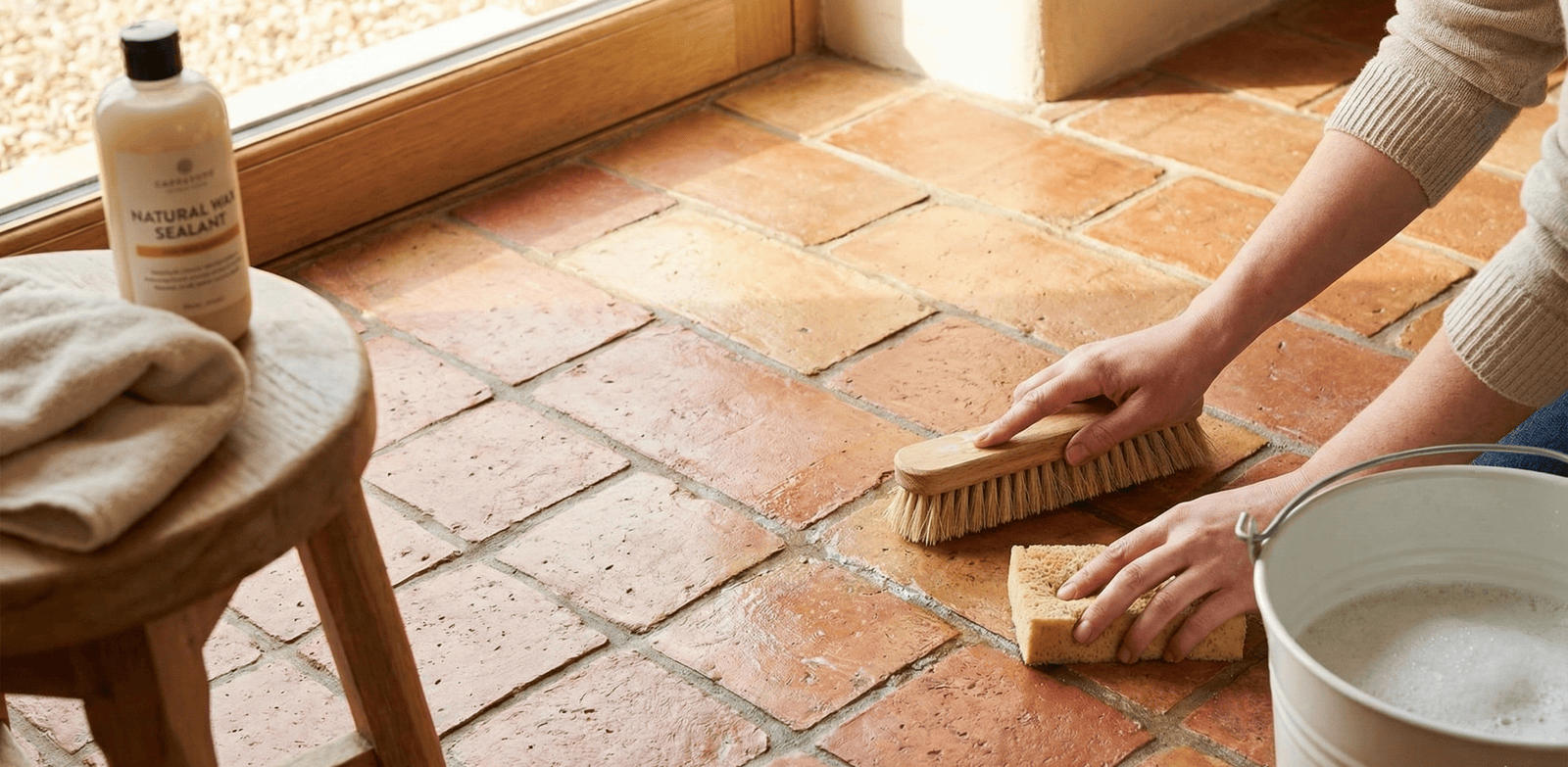
Cleaning Terracotta Tiles – when done properly, it helps preserve a natural material for decades.
Handcrafted terracotta tiles occupy a unique place in the world of floor and wall coverings thanks to their natural appearance, warm tones, and distinctive texture. Each tile bears the mark of the hand that shaped it and the character of the earth from which it was created. This gives a space an atmosphere that is both elegant and deeply connected to nature. Like all natural materials, terracotta tiles require careful and thoughtful maintenance to preserve their qualities, appearance, and functionality for many years to come.
Unlike glazed ceramic tiles from industrial production, terracotta is a porous natural material that can absorb liquids, oils, and dirt. This characteristic is part of its charm, but it also presents a challenge, as improper care can lead to permanent changes in appearance. In this guide, we show you everything you need to know about caring for and cleaning terracotta – from daily routines and periodic protective measures to the correct handling of stains. Each recommendation is explained in detail and supported by background knowledge, because when it comes to natural materials, there are no shortcuts, only a logical system that works.
Tip from a Terracotta Specialist
The best cleaning starts with the right impregnation.
Cleaning Terracotta Tiles – Daily and Weekly Maintenance
The surface of handcrafted terracotta tiles is much like fine skin. Anyone looking to clean terracotta tiles should understand that the material responds to contact, absorbs what rests on it, and changes over time under the influence of light, moisture, and daily use. For this reason, regular maintenance is not merely a matter of cleanliness, but of long-term protection. Every day that sand, dust, and spills are removed promptly is a day in which penetration into the deeper layers of the material is prevented.
In high-traffic areas such as hallways or kitchens, extremely fine dirt particles enter the pores of the tiles. Without regular removal, these particles act like ultra-fine sandpaper, dulling and damaging the surface. Using a soft broom, a vacuum cleaner with a hard-floor attachment, or a lightly damp cloth reliably prevents this effect. The goal is not intensive scrubbing, but rather a gentle “wiping dust from a painting,” allowing the surface to remain breathable and functional.
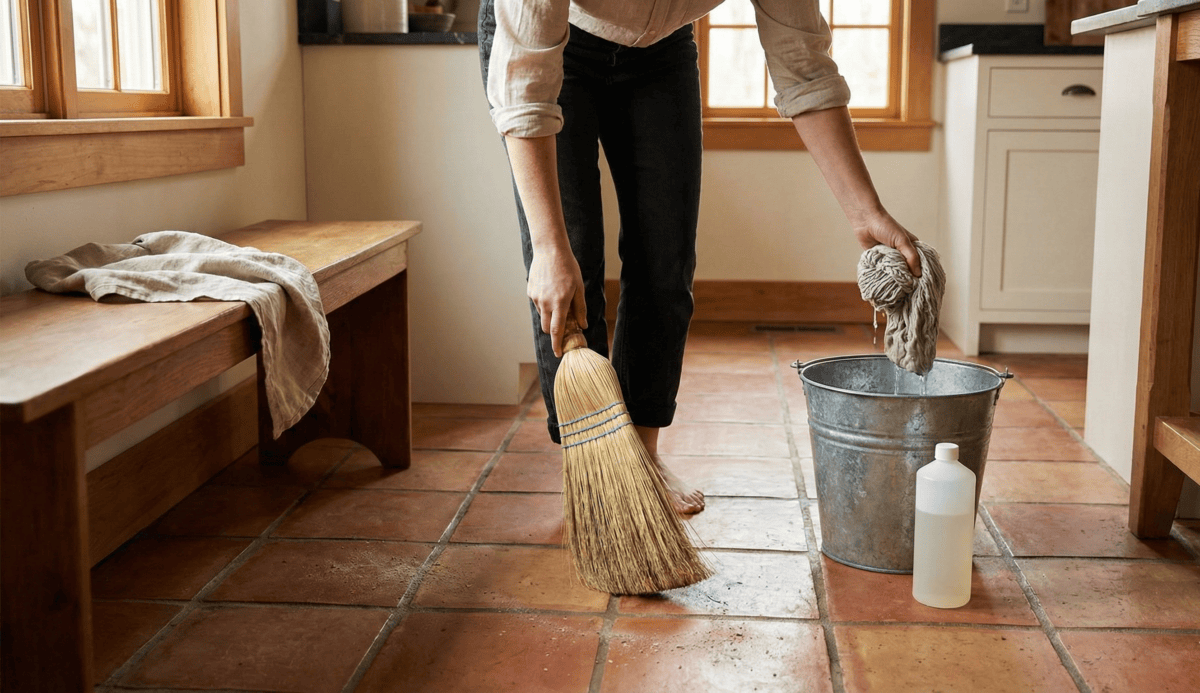
Weekly cleaning requires a bit more attention. After the initial dry cleaning, the surface should be cleaned using lukewarm water and a pH-neutral cleaning agent. Hot water—especially when combined with chemical cleaners—can attack the impregnation. The tiles should not be soaked; instead, they should be wiped only with a well-wrung cloth or mop. Afterwards, the surface should be wiped again with clean water and dried. Residual moisture can not only cause water marks, but may also penetrate the pores and, over time, lead to staining and changes in the material’s structure.
With this simple yet consistent care routine, the natural terracotta surface not only remains clean, but gradually develops a distinctive patina that adds warmth and depth to the space.
Cleaning Agents – What Is Suitable and What Should Be Avoided
With porous natural materials such as terracotta, choosing the right products for cleaning terracotta tiles is just as important as the cleaning technique itself. The surface of handcrafted terracotta tiles is sensitive and behaves very differently from glazed ceramic tiles or synthetic flooring materials.
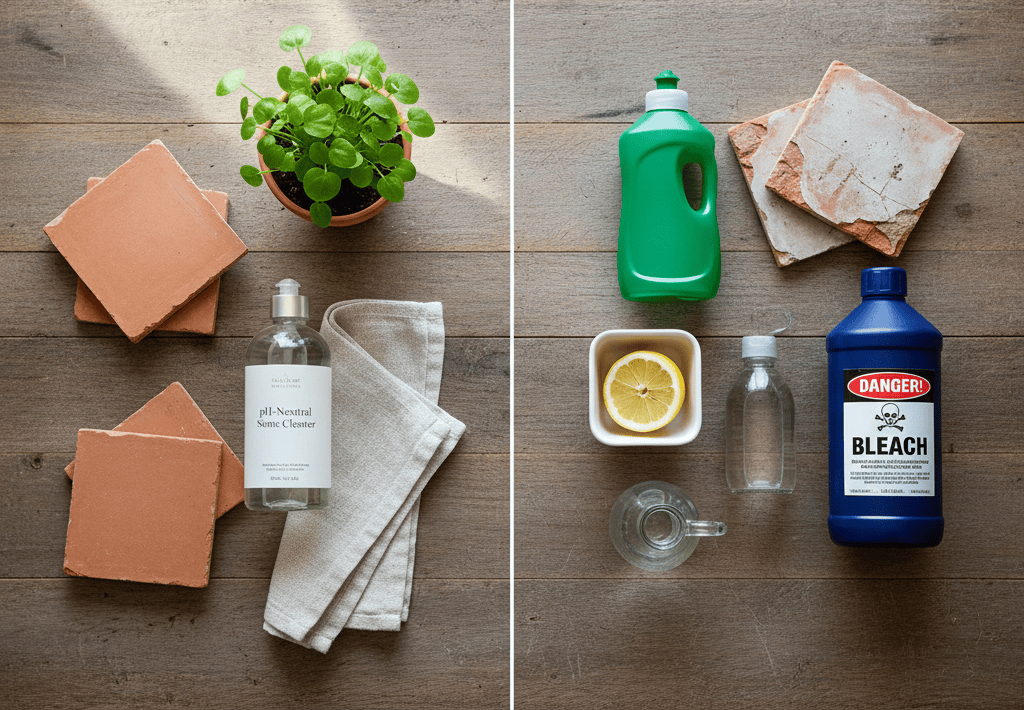
pH-neutral cleaning agents are the only safe choice for regular cleaning. They do not attack the impregnation and help maintain the tile’s natural moisture balance. Many conventional household cleaners—such as dishwashing detergents—contain grease-dissolving additives, fragrances, and colorants that are not compatible with porous materials.
Caption
Household remedies such as vinegar or citric acid should be strictly avoided, as should aggressive chlorine-based products (e.g. Domestos, bleach) or limescale removers. Even though they are often considered “natural,” they cause chemical reactions with the clay material that can lead to fading, color changes, or microcracks—often becoming visible only over time.
Another risk is the use of steam cleaners. Although they may appear hygienic, hot steam opens the pores of the tiles. If the impregnation is not functioning perfectly, moisture penetrates deep into the material and can cause irreversible damage. If used at all, steam cleaners should only be applied with caution and exclusively on fully protected surfaces.
Impregnation / Sealing – Long-Term Protection That Makes the Difference
Die Imprägnierung ist das zentrale Element beim Schutz von Terracotta Fliesen. Ohne sie bleibt die poröse Oberfläche ungeschützt gegen Feuchtigkeit, Flecken und chemische Belastung. Die Imprägnierung erfolgt in mehreren klar definierten Schritten:
- Immediately after installation, before grouting, the first protective application is applied to prevent the grout from penetrating the surface.
- After grouting and thorough cleaning, the second application follows once the surfaces are completely clean and dry.
- Thereafter, impregnation should be renewed every two to five years depending on usage—highly stressed areas (kitchens, entrance areas) may require earlier reapplication.
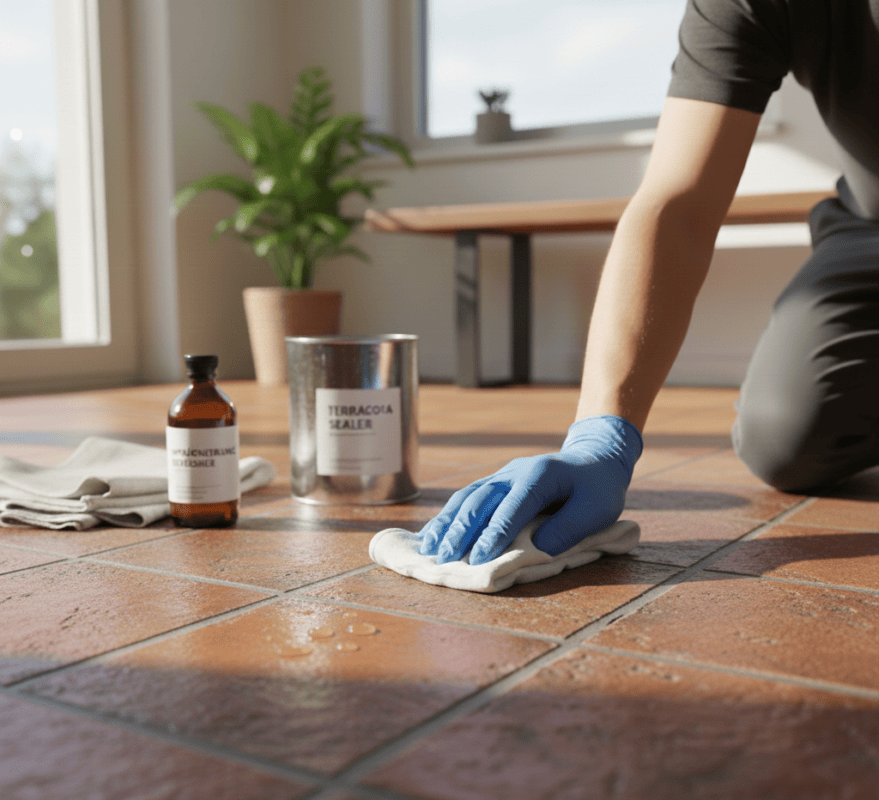
We offer both water-based and oil-based impregnations specifically designed for our handcrafted terracotta tiles.
High-quality impregnations penetrate deep into the material and do not form a film on the surface. Any excess is removed after approximately 10–20 minutes. The tiles must be dry and free of residues before the treatment begins. This preserves the natural appearance and ensures optimal protective performance.
Learn more about impregnation – How to Properly Seal Terracotta Tiles – Protection for Generations
Removing Stains – Responding Correctly Instead of Reacting in Panic
Even with the best maintenance, stains are an inevitable part of everyday life. Properly impregnated terracotta tiles make cleaning significantly easier, and even stubborn marks can usually be removed without harsh treatment.
For grease stains, it is helpful to sprinkle the affected area with talcum powder or baking soda. These substances absorb the grease from the pores. After a few hours, they are vacuumed off and the surface is wiped dry. For acidic beverages (e.g. wine, juice, lemon), the rule is to act quickly—using a pH-neutral cleaning agent and lukewarm water. Wax stains, chewing gum, or similar residues should be carefully removed mechanically with a plastic scraper and then gently cleaned.
After each targeted cleaning, it is advisable to check the area for any impairment of the impregnation and, if necessary, re-treat it.
Typical Care Mistakes – Small Causes, Major Consequences
The greatest damage is not caused by wear, but by improper care. Too much water—especially when combined with aggressive cleaning agents—is the most common mistake. Any unnecessary moisture poses a risk.
The second classic mistake is the use of strong chemicals: clean in the short term, destructive in the long term. Third, cleaning without subsequent rinsing—residues of cleaning agents can leave a sticky surface and cause color changes. Fourth, neglecting impregnation—without it, the tile loses its protective function.
Need help choosing the right impregnation?
We offer both water-based and oil-based impregnations specially selected for handcrafted terracotta tiles.
Conclusion: A Natural Material Requires a Natural Approach
Handcrafted terracotta tiles are not mass-produced industrial products. They are an investment in quality, aesthetics, and atmosphere. Their maintenance is not complicated, but it does require consistency and understanding. Those who care for them properly are rewarded with depth, character, and a patina that becomes even more beautiful over time.
The solution lies in routine: gentle daily care, regular protection, and the avoidance of quick fixes. This is not an additional effort—it is a conscious lifestyle in harmony with an honest natural material.
FAQ – Cleaning and Maintaining Handcrafted Terracotta Tiles
What is the best way to clean terracotta tiles on a daily basis?
Handcrafted terracotta tiles should be cleaned regularly with a soft broom or a vacuum cleaner equipped with a hard-floor attachment. Occasional wiping with a slightly damp mop or cloth is also recommended to protect the porous surface and prevent dirt from penetrating the material.
Which cleaning products are suitable for handcrafted terracotta tiles?
Only pH-neutral, colour-free, and fragrance-free cleaning products should be used on handcrafted terracotta tiles. Products specifically formulated for natural stone or unglazed clay surfaces are ideal, as they help preserve the impregnation and protect the material.
Can vinegar, bleach, or harsh household cleaners be used on handcrafted terracotta tiles?
No. Acidic or aggressive cleaning agents such as vinegar, bleach, or chlorine-based cleaners are not suitable for handcrafted terracotta tiles. They can damage the clay structure, cause discolouration, and lead to long-term deterioration of the surface.
How often should the impregnation of handcrafted terracotta tiles be renewed?
The impregnation of handcrafted terracotta tiles should generally be renewed every 2 to 5 years, depending on usage, humidity levels, and the degree of wear and soiling. In high-traffic areas, more frequent reapplication may be beneficial.
How do you clean grease stains from terracotta tiles?
For fresh grease stains on handcrafted terracotta tiles, sprinkle talcum powder or baking soda over the affected area and leave it to absorb the oil for several hours. Afterwards, vacuum away the powder and gently wipe the surface with a soft cloth.
Why are handcrafted terracotta tiles sensitive to chemical cleaners?
Because handcrafted terracotta tiles are naturally porous and do not have a protective glaze. Cleaning products containing acids or harsh surfactants can penetrate the material, alter its colour, and damage the surface over time.
Can steam cleaners be used on handcrafted terracotta tiles?
The use of steam cleaners on handcrafted terracotta tiles is generally not recommended. Hot steam can open the pores of the material and, if the tiles are not adequately impregnated, may allow moisture to penetrate more deeply, potentially causing permanent staining or damage.
🔧 Do you need support or professional advice?
If you are unsure which maintenance products are suitable for cleaning handcrafted terracotta tiles, whether your floor requires re-impregnation, or how to treat a specific stain correctly, feel free to contact us at any time.
We will be happy to advise you personally and help you find the best solution for your terracotta tiles.
Contact us—we look forward to hearing from you.