


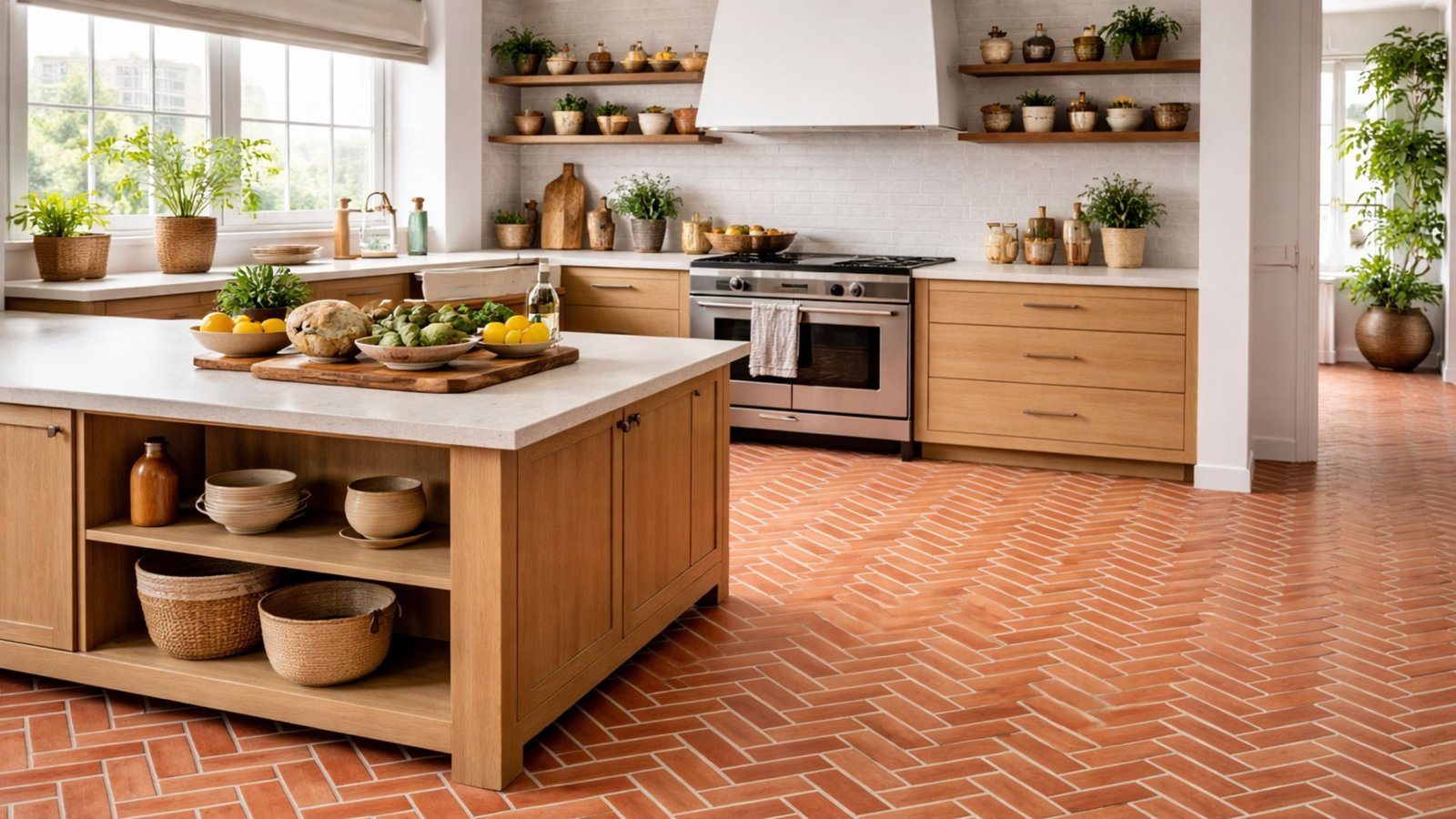
When choosing floor or wall finishes for the kitchen, most people are not looking for trends, but for reliability. The kitchen is a space of daily use, where materials quickly reveal whether they can withstand real-life demands. The key question, therefore, is not whether terracotta tiles are beautiful, but whether handcrafted terracotta tiles in the kitchen perform reliably, remain durable, and truly function in everyday use.
This is precisely where their strength lies. Not in flawless uniformity, but in resilience, honest behavior through daily use, and the ability to age with dignity.
Terracotta Tiles in the Kitchen – A Natural Material in a Demanding Environment
Hardly any space places higher demands on materials than the kitchen. Temperature fluctuations, moisture, steam, grease, mechanical stress, and regular cleaning are part of everyday life. A kitchen floor or wall surface must withstand all of this while still contributing to the overall atmosphere of the space.
Handcrafted terracotta tiles do not compete with industrial materials in terms of perfection or glazed surfaces. Their advantage lies in the physical understanding of the material itself. Terracotta is porous, solid, and open-pored—qualities that, when properly treated, do not weaken the material but instead enhance its stability.
When correctly installed and properly protected, handcrafted terracotta tiles perform just as reliably in the kitchen as ceramic alternatives. At the same time, they offer a noticeably warmer feel underfoot, natural color variations, and a living surface. Especially as a kitchen floor, they create a sense of space that feels calm and grounded rather than cold.
Moisture, Water, and Steam – How Terracotta Tiles Behave in the Kitchen
A common misconception is that terracotta cannot tolerate moisture. This assumption is too simplistic. What truly matters is proper impregnation. When applied correctly, water remains on the surface without penetrating the material or leaving stains. Even with prolonged exposure, no damage occurs.
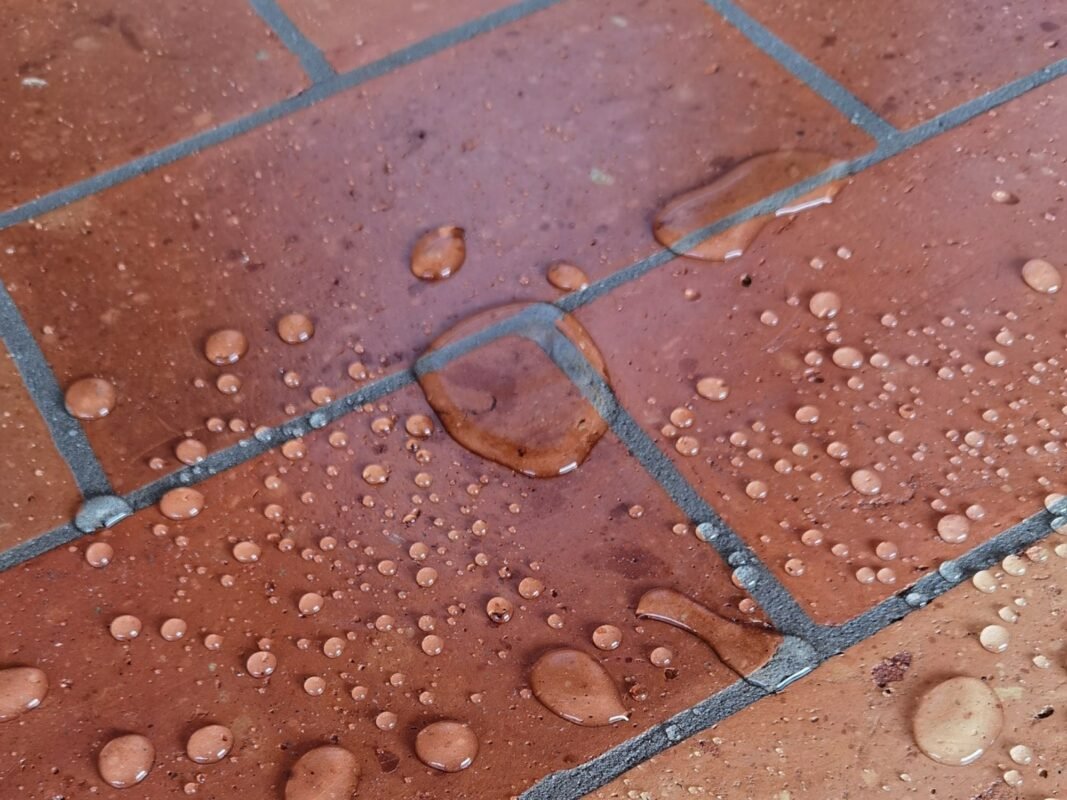
Terracotta is not naturally waterproof. That is precisely why impregnation is not an optional add-on, but an integral part of the system. A high-quality impregnation protects the tile without sealing it. The surface remains vapor-permeable, breathable, and natural, while preventing moisture absorption.
Further reading: Protection for Generations – How to Properly Impregnate Terracotta Tiles
Grease, Oil, and Stains – Practical Experience with Terracotta Tiles in the Kitchen
Alongside water, grease is the greatest concern for many homeowners. In fact, untreated terracotta tiles can absorb oil. With correctly impregnated surfaces, however, grease remains on the surface and can be easily removed with a cloth or a mild cleaning agent.
Over time, lightly used areas—such as in front of the stove or the sink—may develop a subtle patina. This is not a flaw, but a natural result of use. Much like wood or leather, depth and character emerge through wear. Anyone expecting a sterile, unchanging surface will not be satisfied with terracotta tiles. Those who accept materiality and aging gain a floor with a story.
Caring for Terracotta Tiles in the Kitchen – Easier Than Their Reputation
Terracotta tiles are often considered maintenance-intensive. In practice, the opposite is true—provided the material is treated with awareness and respect. Aggressive cleaners, degreasers, or abrasive products are unsuitable and can damage the protective layer. Mild soaps or pH-neutral cleaning products are entirely sufficient.
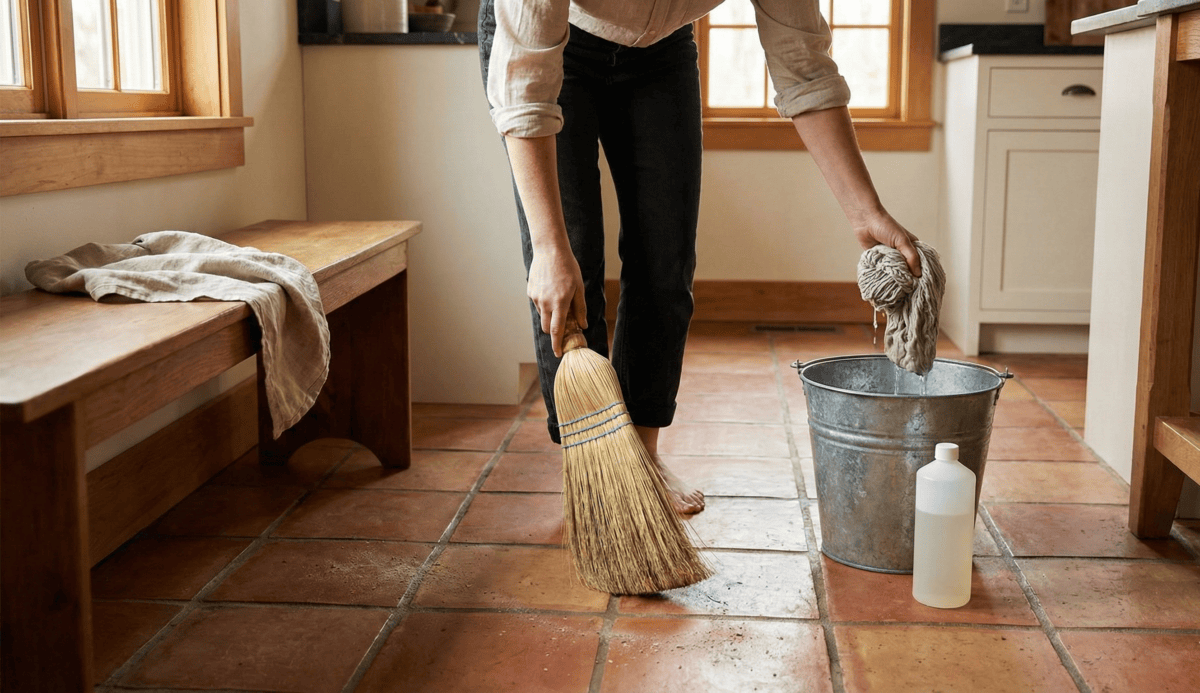
The impregnation typically needs to be refreshed only every few years, depending on the level of use. A simple water-drop test reliably shows whether a renewal is necessary. Compared to many other natural materials, handcrafted terracotta tiles are surprisingly low-maintenance.
Further reading: Care and Cleaning of Handcrafted Terracotta Tiles – The Complete Guide
Aesthetics in the Kitchen – Terracotta Tiles Are Quiet, Yet Deep
Handcrafted terracotta tiles are never completely uniform. That is precisely where their quality lies. In the kitchen, they do not dominate the space but instead connect materials such as wood, metal, textiles, and light. In classic kitchens they appear authentic; in modern concepts they create warmth and a sense of grounding.
Especially as a kitchen floor, terracotta tiles bring weight, texture, and visual calm into the space. They are not a short-lived trend, but a long-term decision in favor of substance.
When Terracotta Tiles Are Not the Right Choice for the Kitchen
Honestly speaking, terracotta tiles are not suitable for every kitchen. Those who operate a highly functional work kitchen with heavy wear and aggressive cleaning routines should consider alternative materials. Likewise, anyone expecting a surface that remains visually unchanged for decades is likely to be disappointed.
In addition, installation, adhesive, grout, and impregnation must be precisely coordinated. Proper, professional execution is essential. Errors in workmanship directly affect everyday usability.
Further reading: How to Install Terracotta Tiles Correctly – A Step-by-Step Guide
Who Handcrafted Terracotta Tiles in the Kitchen Are Ideal For
Those who see the kitchen not merely as a functional space but as the heart of the home make a conscious choice with terracotta tiles. They are not a neutral surface, but an integral part of the atmosphere. People who value materiality, accept change, and prioritize character over perfection will benefit from this choice in the long term.
When properly planned and professionally executed, handcrafted terracotta tiles in the kitchen are not a compromise, but a clear statement for authenticity, durability, and lived-in quality.
Conclusion – The Kitchen as a Space of Truth
The kitchen is the most honest space in the home. It is where work happens, life unfolds, spills occur, and moments are shared. The material that accompanies this daily reality should be just as honest. Handcrafted terracotta tiles are not a material for everyone. But for those seeking depth, warmth, and authenticity, they are among the most convincing solutions for kitchen floors and wall surfaces.
If you are considering using handcrafted terracotta tiles in your kitchen, seek personal consultation or experience the material through real samples.
Frequently Asked Questions About Terracotta Tiles in the Kitchen
Sind handgefertigte Terracotta Fliesen für Küchenböden geeignet?
Yes. When properly impregnated and professionally installed, they are very well suited as a durable and comfortable kitchen floor.
How Often Should Terracotta Tiles Be Impregnated in the Kitchen?
Typically only every few years. A simple water-drop test shows whether a refresh is necessary.
Do Grease or Oil Penetrate Terracotta Tiles?
Only on unprotected surfaces. With correctly impregnated terracotta tiles, oils remain on the surface.
How Do You Clean Terracotta Tiles in the Kitchen?
Using mild, pH-neutral cleaning agents and avoiding aggressive chemicals or abrasive products.